Look around you. Pick up your phone, check the tag on your shirt, or glance at the charger powering your laptop. Chances are, you’ll find the words "Made in China." For decades, this phrase has been synonymous with mass production and affordable goods. But what if that label is telling an outdated story? What if, while we were focused on the products, we missed the revolution happening behind them?
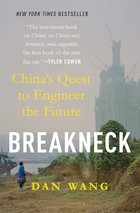
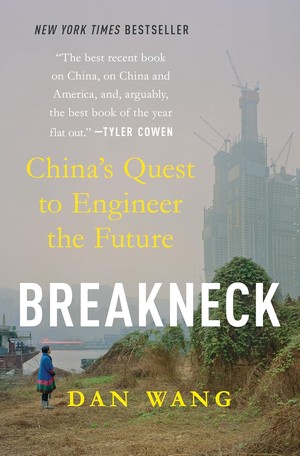
In his highly anticipated new book, Breakneck: China's Quest to Engineer the Future, technology analyst Dan Wang yanks back the curtain on this transformation. This isn't just another book about China's economy. Based on years of living and working within the country, Wang provides a stunning, on-the-ground account of a nation moving at a speed that is, quite literally, breakneck. It’s a book that reframes the global power struggle, moving it from the trading floor to the factory floor, from political rhetoric to the very real construction of the future.
Not Your Grandfather's Factory Floor
If your image of a Chinese factory is a dim, crowded room of workers assembling toys, Breakneck will shatter it. Wang takes us inside gleaming, hyper-advanced manufacturing hubs where robots and AI are as common as people. He walks us through cities that have sprung up from nothing in a matter of years, connected by the world's most extensive high-speed rail network.
This is the "engineering" of the title. It’s about more than just products; it's about engineering an entire society for maximum efficiency and growth. Wang contrasts this relentless forward momentum with what he observes as a stalled and complacent America, a nation struggling to repair its own aging infrastructure while China builds the cities of tomorrow. He doesn't just present data; he describes the sheer scale and ambition in a way that is both awe-inspiring and unsettling. You can almost feel the hum of the machinery and the frantic energy of a nation determined to leapfrog the West.
The Human Cost of "Progress"
A book about state-directed industrial policy could easily become a dry, academic affair. But Wang’s greatest strength is his focus on the human element. Breakneck is filled with stories of the people caught in this whirlwind of change—the engineers, the factory workers, the entrepreneurs, and the citizens whose lives are irrevocably altered by the Communist Party's grand designs.
What does it feel like to live in a society where progress is pursued at any cost? Wang explores the social consequences of this top-down approach, from the immense pressure on students and workers to the environmental fallout of rapid industrialization. He masterfully blends sharp economic analysis with intimate reportage, giving a voice to the individuals navigating this complex new reality. It’s a powerful reminder that behind the impressive statistics and massive projects are millions of human lives, each with their own ambitions and sacrifices.
Is Breakneck Your Next Read?
This book offers a vital, nuanced perspective that is essential for understanding our modern world. But is it the right book for you?
You should definitely pick up Breakneck if:
- You're curious about the real story behind China's economic and technological rise.
- You follow the US-China rivalry and want a fresh, on-the-ground perspective that goes beyond headlines.
- You're fascinated by technology, manufacturing, and how massive infrastructure projects reshape societies.
- You enjoy immersive nonfiction that combines expert analysis with compelling human stories, in the vein of authors like Evan Osnos or Peter Hessler.
You might want to skip it if:
- You're looking for a simple, good-vs-evil narrative. Wang presents a complex picture of China's strengths and its deep-seated problems.
- You prefer your nonfiction to be purely historical. This is a very contemporary book focused on the present and near future.
- You have little interest in economics, geopolitics, or the intricacies of industrial policy.
A Glimpse into the 21st Century's Defining Story
Breakneck is more than just a book about China; it’s a book about the future. It argues that the competition between the US and China isn't just about tariffs or military might—it's a fundamental conflict between two different ways of building the world. One is slow, democratic, and perhaps stalled. The other is authoritarian, brutally efficient, and moving at a pace we can barely comprehend.
Dan Wang has delivered a clear-eyed, essential guide to the most significant geopolitical and technological story of our time. It’s a book that will leave you with a profound new understanding of the forces shaping our world and force you to ask a critical question: What kind of future are we building, and are we building it fast enough?