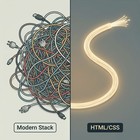
There is a specific kind of exhaustion that hits a developer when they look at a node_modules folder that weighs heavier than the operating system it runs on, all to render a static landing page. As we hurdle toward 2026, a growing sentiment is bubbling up from the underground of the tech community: Framework Fatigue.
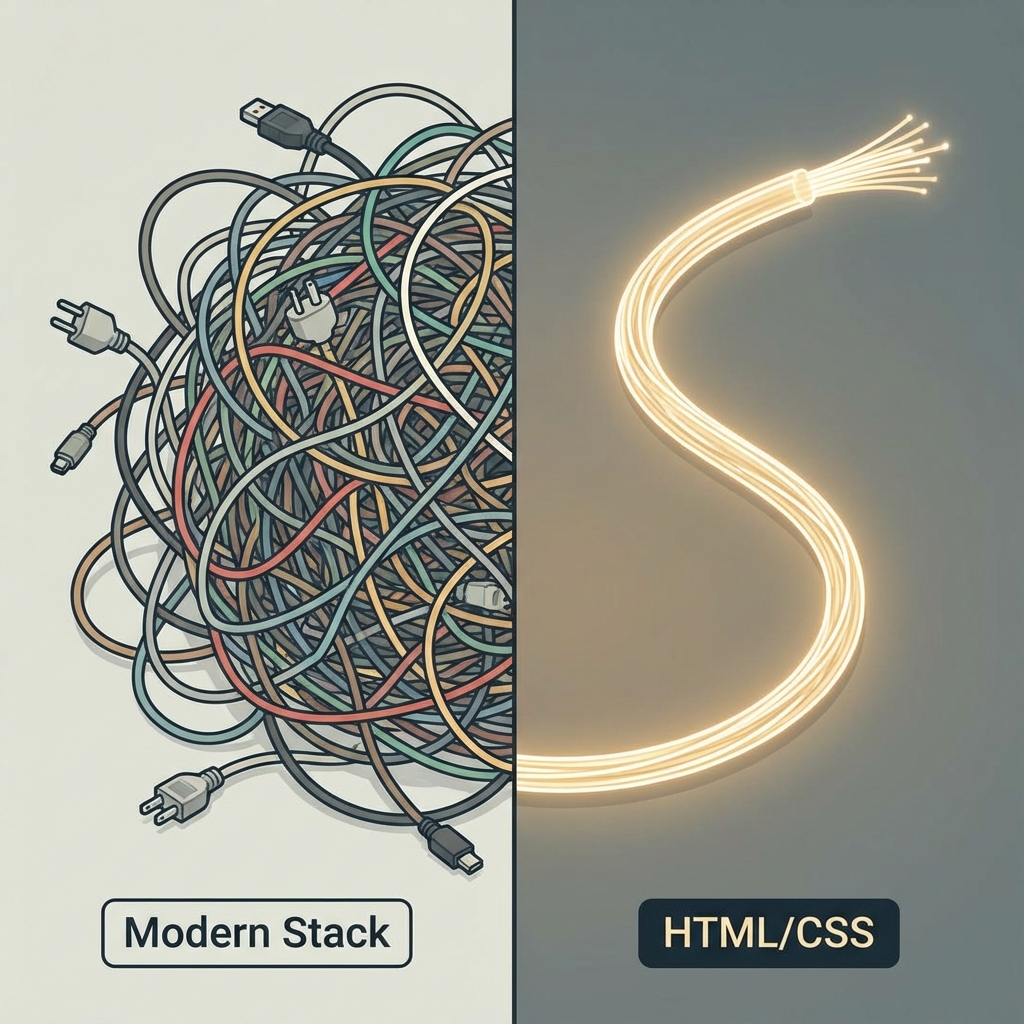
While modern frameworks like React, Vue, and Angular have revolutionized how we build complex web applications, there is an increasing nostalgia for the days when the web was just HTML, CSS, and a sprinkle of jQuery. But is this merely rose-tinted nostalgia, or is it a valid critique of an industry that has become addicted to complexity?
The "Over-Engineering" Epidemic
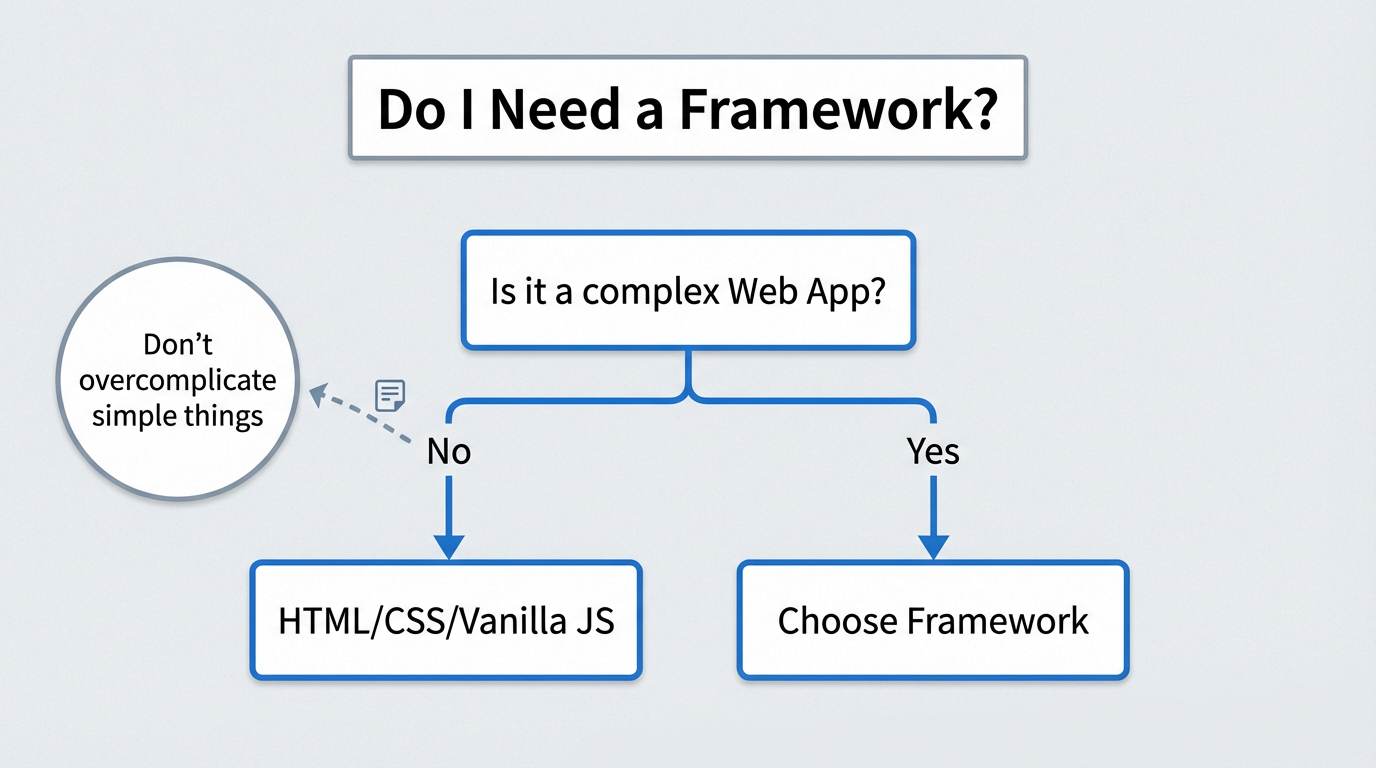
The core of the frustration isn't about the frameworks themselves, but rather their misapplication. We have reached a point where developers are putting a $1,000 saddle on a $10 horse. Using a heavy JavaScript library to build a brochure site or a simple blog is akin to commuting to the grocery store in a Formula 1 car; it’s impressive engineering, but entirely impractical and uncomfortable for the task at hand.
Veterans of the industry point out that the barrier to entry has shifted drastically. In the mid-2000s, viewing the source code was a learning tool. Today, viewing the source often reveals a compiled, minified, unintelligible blob. This complexity worries educators and mentors who fear it dissuades future developers from ever starting. When the "Hello World" tutorial requires a package manager, a bundler, and a transpiler, we have lost the immediacy that made the web magical.
Rose-Tinted Viewports
However, it is disingenuous to claim the "good old days" were flawless. Those yearning for 2006 often forget the nightmares of cross-browser compatibility. We didn't have unified standards; we had Internet Explorer 6. We didn't have Flexbox or Grid; we had float clears and table layouts. And, perhaps most significantly, we didn't have a mobile-first world.
While jQuery was a lifesaver for normalizing browser behaviors, maintaining a large-scale application built entirely on jQuery "spaghetti code" was a developer's specific brand of hell. The modern component-based architecture (championed by React and Vue) solved real problems regarding state management and reusability. We cannot simply regress; we must adapt.
The User Does Not Care About Your Stack
The most damning argument against unnecessary complexity comes from the ultimate arbiter of value: the user. Your users do not care if your site is built with React, Astro, Lit, jQuery, or raw HTML3.2. They care about load times, layout stability, and content.
When we ship megabytes of JavaScript to render text that could have been static HTML, we aren't just hurting developer experience; we are degrading the user experience. Performance is a feature, and raw HTML/CSS is still the performance king.
The "New" Old School
Fortunately, the pendulum is swinging back toward the middle. We are seeing a resurgence of tools that honor the simplicity of the past while utilizing modern capabilities.
Technologies like HTMX and AlpineJS allow developers to achieve dynamic interactivity directly in the HTML markup, effectively replacing the need for complex build steps for many use cases. Static Site Generators (SSGs) and tools like Astro allow us to code in components but ship zero JavaScript to the client unless absolutely necessary.

Conclusion
You don't need permission to use plain HTML and CSS. If you are building a landing page, close the terminal, delete the node_modules, and write the code. The web platform itself has matured enough that "Vanilla" JavaScript is now a powerful framework in its own right.
The goal for 2026 shouldn't be to learn the next big framework, but to relearn how to judge the right tool for the job. Sometimes, the best code is the code you don't write.