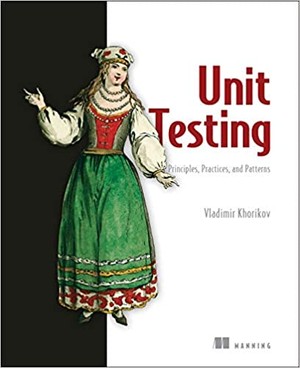
This book is an absolute gem for anyone interested in software development, particularly unit testing. It completely shifted my perspective on how to approach unit tests and write higher-quality code. I also gained a much deeper understanding of Domain-Driven Design, especially in relation to testing. The author's writing is incredibly concise and direct, packing each chapter with valuable insights. I highly recommend checking out their blog too; it's a treasure trove of software development wisdom.
Having enjoyed the author's online courses, I picked up this book hoping to refine my unit testing skills. It's surprisingly engaging for a textbook, so much so that I devoured it in just two days! The concepts are presented with crystal-clear examples, making them incredibly easy to grasp. The logical structure and helpful section summaries make it a fantastic reference for anyone looking to improve their unit testing game or just shore up some questionable tests.
This book is a must-read for anyone looking to grasp testing concepts. I finally had a breakthrough in understanding the difference between testing behavior versus implementation, as well as the nuances of mocking and integration testing. It's so good, I even brought my team up to speed on integration testing, and the results have been fantastic.
This book is a gem for anyone involved in application testing. The author's insights, clearly drawn from extensive experience, are truly invaluable and offer a fantastic high-level overview of testing strategies. You'll find numerous patterns here that are sure to elevate the quality of your tests. While the examples are in C#, they're so straightforward that even programmers with minimal experience will grasp them easily. It's hands down the best testing book I've encountered, and I can't recommend it enough.
This book is an absolute gem for developers, especially those interested in Test-Driven Development. The author packs in a wealth of eye-opening knowledge that's sure to boost your TDD skills significantly. I've always struggled with keeping test suites maintainable, particularly when multiple teams are involved, and this guide offered a treasure trove of practical tips and techniques to ensure our suites remain manageable and robust. It's a highly recommended read for developers at any stage of their career.
This is hands down one of the best books I've encountered on automated testing recently. Even as a seasoned developer with years of unit testing experience, I found myself learning a ton of new concepts and techniques. It's certainly not aimed at newcomers, but for those already in the field, it's an absolute must-read. Highly recommended!
Even though I'm already familiar with much of the material, I was pleasantly surprised by how much I enjoyed this book. It's packed with incredibly useful information, presented in an easy-to-read and engaging way that makes you want to keep turning the pages. This is exactly the kind of resource I wish I'd had when I was starting out as a software engineer.
This book is a real gem, especially for anyone already familiar with unit testing and who's wrestled with its challenges firsthand. You'll likely discover solutions to a multitude of your lingering questions within these pages. It's a highly recommended read for its practical insights.
This book is hands down the best resource I've found on unit testing. For years, I struggled with the 'mock everything' approach, feeling like something was missing and that it wasn't the most effective method. My previous projects were bogged down by an increasing number of less valuable tests and the inherent fragility of mock-heavy designs, which completely undermined the purpose of unit testing. I truly wish this book had been available much sooner, as it would have saved me from years of learning the wrong way.
This book was an absolute delight to read, managing to make a potentially dry topic like testing feel engaging and accessible. The author's clear explanations and well-chosen examples demystified the theory behind testing, helping me pinpoint past mistakes and build confidence in my own code. I particularly appreciated the insights into how design patterns connect with testing, offering practical ways to improve reliability. It's rare for a book to have such a profound impact, but this one genuinely shifted my perspective on software development and challenged me to adopt better habits.
This book has been a revelation for me as a developer, shifting my perspective entirely on writing maintainable and testable code. I used to struggle with complex unit tests that focused too much on implementation details, but this read introduced me to the power of domain-driven design and clean architecture. The author's concise writing style, complete with practical code examples and clear motivations, made grasping these concepts incredibly easy. It's evident the author genuinely cares about improving code quality globally, and I'm so grateful this resource exists to guide my learning journey.
This book really shines when it delves into the various approaches to software testing, a topic not often covered with such depth. The early sections are particularly strong in laying out the different schools of thought. While a few of the author's points didn't quite land for me and some logical leaps felt a bit abrupt, the clear explanations and well-chosen topics made it a captivating read overall. It's definitely a must-read for any software engineer, right up there with 'Growing Object-Oriented Software, Guided by Tests'.
This book is really only useful if you're already working on a Domain-Driven Design project; otherwise, it's pretty much a waste of time. The author's clear disdain for the London School of TDD is palpable throughout, with entire sections dedicated to why they believe it's flawed. If you're a fan of mocks or looking for general testing advice independent of architecture, prepare to be let down. Many of the examples felt like recycled content from online sources, almost as if it were promotional material for the author's other platforms. While it might offer a different perspective on test writing, I can't recommend it as a starting point for beginners, as blindly following its advice without prior knowledge could easily lead to project chaos.
This book is an excellent introduction to unit testing, packed with practical advice on assessing value and maintenance. The author's explanations are remarkably clear and simple, even for complex topics, and the diagrams and code samples are incredibly helpful. I especially appreciated how the author anticipated reader questions and provided insightful, opinionated explanations for his choices. While some of the early theoretical content might feel a bit academic, it lays a solid foundation for clear communication about coding practices. Overall, it's a highly effective and enjoyable read that offers valuable insights beyond just unit testing.
This book really felt more like an introduction to acceptance testing within a Domain-Driven Design context, rather than a guide to unit testing. The author's approach necessitates architectural layers like application and infrastructure, making it suitable only for core subdomains with complex domain models. It's a bit misleading to frame it as unit testing; the focus seems to be on promoting DDD principles over actual unit testing techniques.
This book really hit home for me, articulating a testing philosophy I've long believed in but struggled to express. The author's emphasis on domain-driven testing, focusing on business needs rather than trivial unit tests like getters, is a refreshing and practical approach. It's a stark contrast to outdated TDD dogma that chased 100% coverage for its own sake. I particularly appreciated the advice on testing from the client's perspective and the judicious use of mocks. This is a must-read for anyone looking to write more maintainable and effective code.
This book is an absolute game-changer for anyone invested in unit testing. It tackles the common frustrations of brittle, unmaintainable test suites head-on, offering a clear, methodical approach that simplifies even complex topics. The author's analytical style, akin to a lawyer dissecting a case, breaks down problems and rebuilds them with insightful conclusions. You won't just improve your tests; you'll fundamentally enhance how you approach coding and refactoring.
This isn't the best starting point for absolute beginners to TDD, but for those with some prior experience, it's an absolute treasure trove. The author shares genuinely profound insights backed by excellent, practical code examples. I'd put this book in the same league as classics like 'Clean Code' and 'Refactoring' – it's that good.
This book is absolutely fantastic and gets straight to the heart of creating effective unit tests. Honestly, it's the best resource I've encountered on the subject. Vladimir really nailed it with this one.
Vladimir Khorikov has done it again with this fantastic book! It's packed with incredibly valuable insights that every software developer, regardless of their preferred language, should absorb. I genuinely wish I'd gotten my hands on this gem sooner; it's a must-read for anyone looking to level up their skills.
While the initial chapters offered a fresh perspective on familiar concepts, providing some genuinely useful tools for explanation and teaching, the book ultimately falls short. Its heavy reliance on self-promotion, particularly through blog and course spam, overshadows any original content. Furthermore, the author's biased approach to topics like mocks and infrastructure, along with a potentially misleading presentation of architectural patterns, makes a significant portion of the material questionable, especially for less experienced readers. This book isn't recommended for those seeking novel theories or well-grounded explanations; it feels more like an advertisement than a substantive contribution.
This book is a standout in the realm of unit testing, offering a fantastic approach to testing enterprise applications. It really breaks down how to assess test quality and write tests that provide a solid return on investment, all explained in a clear and accessible writing style. The author's arguments are well-articulated, and I found myself agreeing with nearly all the advice, having learned many of these lessons the hard way myself. It tackles common unit testing questions with depth, moving beyond simple examples and even exploring how to design production code for better testability. I wholeheartedly recommend this, especially for team reading, discussion, and establishing a shared understanding of what constitutes a good test.
As a long-time follower of the author's work, I've been eagerly anticipating this book, and it certainly didn't disappoint. It offers a fantastic, holistic perspective on building maintainable software, going far beyond just unit testing to emphasize proper code design. While the abundance of theory and fewer code examples might not suit everyone, I found its depth incredibly valuable. I'm already looking forward to their next book, perhaps on DDD!
This book was a revelation for me, finally clarifying what 'better' testing truly means after a period of intense confusion. It brilliantly systematized my understanding and provided invaluable code examples, making me confident in my ability to write superior tests. While it doesn't cover every single testing scenario, like integration tests with pure SQL, and leaves some questions about layer testing unanswered, it's an absolute must-read. I genuinely wish I'd discovered it sooner; it would have significantly smoothed my learning curve.
This book really shines once you've got a handle on unit testing basics and are looking to refine your approach. It lays out a solid framework for what constitutes a 'good test' and explores the crucial connection between testing strategies and software design, touching on concepts like hexagonal architecture. While not every heuristic resonated with me, the read is incredibly refreshing, offering a clear, opinionated perspective that elevates testing beyond the fundamentals. It masterfully places testability within the context of larger concerns like maintainability and architecture, making it a highly recommended read for experienced developers.
While the title might be a bit misleading, this book is an absolute gem for anyone building enterprise software with DDD and Hexagonal Architecture. It dives deep into both unit and integration testing, clearly outlining their differences, similarities, tradeoffs, and benefits. It's incredibly valuable because so many developers still struggle to grasp why unit tests alone aren't sufficient. Instead of explaining it myself, I'll be recommending this book to everyone!
This book is a game-changer for anyone serious about unit testing. Even after years of practice and reading other guides, I found its practical, intuitive explanations incredibly valuable. The concepts are presented so clearly that they're easy to grasp, regardless of your native language. My team and I have integrated its principles into our daily workflow, and the improvement has been significant. It's an absolute must-read for developers looking to elevate their testing skills.
This book delves into more than just unit testing, also exploring integration testing and architectural concepts like Hexagonal architecture, functional programming, and logging. While the author, a proponent of the 'classic' Detroit camp of unit testing, offers some valuable insights, their perspective didn't quite resonate with my own 'London' camp approach. The examples are clear and effectively showcase the strengths of the classic approach and DDD, but I found them less applicable to the complexities of large enterprise applications I typically work with.
This book really dives deep into unit and integration testing, with a nod to end-to-end tests as well. While it touches on important theoretical concepts, the author's practical, experience-driven approach shines through, making it incredibly useful. You'll get a solid grasp on what makes tests high-quality and gain a framework for analyzing your own test suites. It's definitely a must-read for both developers and QA engineers looking to up their testing game.
This book is a fantastic resource for anyone diving into unit testing. It brilliantly clarifies the concept of a 'unit' and even delves into the nuances of the London and Chicago schools of thought. The advice on crafting effective unit tests and their role in fostering sustainable project growth is invaluable. Seriously, if you're a developer, you need to pick this up; I enjoyed it so much I started a book club with my team to dissect it further!