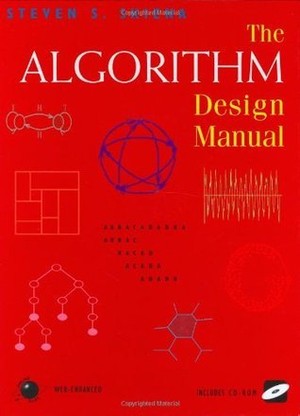
This book serves as a fantastic resource, especially with the reference section at the back that's perfect for quick lookups. While the war stories are a brilliant concept, a few feel a bit dated or hard to track. My main gripe involves the frequent errors throughout the text. You'll find everything from minor typos to missing lines in the algorithms, which makes the technical parts pretty frustrating to navigate.
This is the kind of resource you'll keep on your desk for years because it's incredibly practical as a reference guide. Half the book functions like an algorithmic dictionary that maps specific problems to their solutions, complete with helpful C code samples. Skiena’s writing is witty and accessible, making it the perfect entry point before you tackle the more dense academic texts. It's an essential starting point for any student diving into data structures.
This is a total game-changer that makes me wish I'd discovered it way before my retirement. While Sedgwick has been my go-to recommendation for three decades, this text actually manages to surpass it. The way it demonstrates the sheer utility of graph theory is brilliant, especially since transforming a problem into a graph often reveals non-obvious algorithms that absolutely crush any other approach. As a math major, I can confirm that graph theory was the most practical subject I ever studied, and this book captures that power perfectly.
This is an incredible resource for understanding how algorithms dictate our modern existence and run the devices we use every hour. It's particularly useful for learning how to deconstruct massive problems into manageable pieces that actually yield results.
This manual serves as a solid refresher for anyone who already holds a computer science degree, though it doesn't necessarily present new material for veterans. It's incredibly convenient to have every essential algorithm packed into one digital volume rather than searching through multiple sources. Every programmer or data scientist should probably have this reference on their shelf for quick lookups.
This is a fundamental text that every computer scientist needs to have on their shelf. It clarifies that while industry often settles for 'good enough' code to keep things moving, you'll eventually hit a wall where true algorithmic efficiency becomes a legal or performance necessity. You can't just ignore the math forever.
While it's certainly more approachable than the standard CLRS textbook, don't be fooled into thinking this is a light read since you'll still need a robust grasp of calculus and computer science fundamentals. The structure is fantastic, beginning each section with a clear problem statement and probing questions that reveal the subtle complexities you might otherwise miss. I particularly enjoyed the 'War Stories' because they bridge the gap between abstract theory and real-world implementation, showing exactly how these algorithms function in practice. Plus, the author includes an impressive amount of references for anyone looking to dive deeper into specific topics. It's a solid, application-heavy resource that balances rigorous exercises with practical context.
This stands out as a top-tier resource for the field, though calling it a beginner's guide feels like a stretch. You'll likely struggle if you don't have the prerequisite knowledge, despite what some overconfident readers might claim. It's a solid, high-quality text that I'd definitely recommend for those ready for the challenge.
This masterpiece represents a lifetime of research and successfully bridges the gap between theoretical concepts and practical application. While it's an incredible integration of multiple fields, the density is no joke. Even with my background in electrical engineering, I could only manage about fifty pages a day, so beginners might find the learning curve quite steep.
This is a solid, wide-ranging guide to computational algorithms that's perfect for students or developers looking to sharpen their skills. While the author's conversational style makes the industry applications clear, the text gets a bit wordy and could've used a stricter focus on runtime analysis. You'll still find a few typos in this edition, but the massive bibliography is an incredible resource for anyone wanting to dive deeper into specific topics.
Skiena's writing style turned me into an instant fan, especially with those 'war stories' that provide a vivid look into the life of a professional algorist. While the prose quality seems to dip slightly in the latter half, the book remains a top-tier design manual that outshines most competitors. I found the second half a bit less engaging because it shifts toward brief overviews and external references rather than deep, hands-on implementations. It's a solid four-star resource that really helps solidify core concepts, even if the concluding sections feel a bit rushed compared to the brilliant opening.
While the second half functions as a standard, rigorous catalog of algorithmic solutions, the first part of this book is truly exceptional. The author delivers practical insights and intuitive explanations for major problems, making complex concepts much easier to grasp. I especially enjoyed the 'war stories' in the initial chapters that demonstrate how these algorithms function in real-world scenarios based on actual professional experience. It's a fantastic resource that balances a traditional reference guide with unique, experience-driven teaching.
This is a fantastic resource for developers because it prioritizes practical application over theoretical fluff. Instead of just dumping code, the author focuses on teaching you how to recognize problem patterns and adapt core techniques like BFS or dynamic programming to fit real-world scenarios. It's definitely more of a pragmatic guide than a dense academic tome, skipping over niche data structures to make room for a massive catalog of problem-solving references. You should definitely tackle the exercises, especially the interview-specific ones, since they provide the kind of hands-on insight that actually sticks during a job hunt. It's a solid five-star choice for anyone who wants to actually use algorithms rather than just memorize them.
This is a solid reference for diving into complexity and NP-completeness, though the academic prose is unnecessarily dense and makes simple concepts feel like a chore. I really liked the opening chapters on developing an algorithmic mindset, but the rest of the book requires constant outside research just to parse the jargon. It's definitely not a cover-to-cover read, so just keep it on your shelf for when you need to look up specific design principles.
The author seems more interested in flexing their intellectual muscles than actually teaching the material, making the second chapter nearly impossible to follow. Even as someone who enjoys formulas, I found the examples completely unrelatable and boring. It doesn't help that sixty percent of the book consists of exercises that nobody will ever actually finish. Maybe the Russian translation messed things up, but this technical read was just a confusing slog.
This text is incredibly comprehensive, yet the actual explanations for the algorithms felt a bit lackluster. It functions much better as a technical reference for quick lookups rather than a primary resource for deep learning. If you're trying to grasp these concepts from scratch, you might find the instructional style a bit thin.
This book provides solid examples and clear explanations for the types of algorithms that pop up during technical interviews. It's a practical resource if you're looking to sharpen your problem-solving skills before a big meeting.
It's pretty rare to find a book about algorithms that doesn't feel like a chore, but this one is actually an enjoyable read. The author managed to make complex topics engaging and fun.
This is a fantastic resource if you're looking to actually build and implement algorithms in the real world. It's highly recommended for its practical approach.
This 1998 edition remains a solid resource because it breaks down essential algorithms with impressive clarity. You'll find straightforward explanations of fundamental data structures like stacks, queues, and dictionaries, along with the core mechanics of sorting methods like selection, insertion, and merge sort. It's a great pick if you need a concise technical refresher on how these systems actually function under the hood.
This is a fantastic, example-heavy guide to algorithms that prioritizes practical application over dense mathematical proofs. The first half does a great job covering essentials like data structures and graph theory, but the real highlights are the 'war stories' where the author shares his real-world consulting mishaps. While the second half serves more as a quick-reference catalog and can feel a bit rushed in areas like string algorithms, the inclusion of actual source code instead of just pseudocode makes it a gold mine for interview prep. It's a bit rough around the edges with some typos and repeated problems, so you might want a more formal textbook nearby to supplement the theory. Overall, it's an engaging and highly readable resource that's basically mandatory if you're gearing up for technical interviews.
Skiena delivers a masterclass that bridges the gap for self-taught developers who usually rely on pre-built libraries but lack a deep understanding of algorithmic efficiency. While many programmers just import a fix and hope for the best, this book explains the actual mechanics of data structures and sorting so you don't end up stuck with an impossible problem. The combination of technical theory and real-world 'war stories' makes the concepts stick much better than a standard textbook. It's a refreshing change from typical interview prep because it focuses on genuine engineering wisdom rather than just memorizing tricks. Even if your daily work is mostly data plumbing, this guide helps you approach every task with a professional, analytical mindset.
This is a fantastic practical guide that's actually engaging enough to read during a commute. While it doesn't dive into the heavy theoretical depths of CLR, it's a much more portable and useful resource for a working professional. It served as a perfect refresher for my upcoming interviews at major tech firms, covering graph algorithms and NP-completeness more efficiently than my old textbooks. You'll get exactly what you need for technical prep without the dense academic filler.
If you're looking for a solid entry point into algorithms, it usually boils down to this title or the standard CLRS text. I found this manual far more engaging thanks to the 'war stories' that illustrate real-world applications and the massive problem encyclopedia in the back. While it's labeled as an introductory guide, the depth of coverage makes it a valuable resource even for veteran developers. It's a must-read that doubles as a handy reference for any programmer's shelf.
This book struggles because it can't decide if it wants to be a practical guide for coding interviews or a dense, theoretical textbook. I ended up skipping the final chapters on NP-completeness and approximation algorithms since those academic proofs aren't very useful outside of research. It's a long, difficult slog that sits awkwardly in the middle of two different goals. You'd be better off choosing a dedicated interview prep book or committing to a rigorous classic like CLRS instead of this compromise.
It's pretty rare for me to actually wrap up a programming book from cover to cover, but this one managed to keep my attention the whole way through. The initial chapters break down computational complexity in a way that's incredibly useful for anyone handling massive datasets, even if the math gets a bit dense at times. You can easily skim the heavier code snippets without losing the narrative flow, which is a huge plus for staying engaged. The latter half serves as an excellent reference guide, providing the exact terminology you need to effectively search for solutions online.
This guide is way more accessible and application-focused than the standard CLRS textbook. The 'Hitchhiker's Guide' section in the back is a lifesaver for solving real-world problems, and the core chapters are perfect for nailing technical interviews at big tech firms. It's a solid recommendation for anyone who needs practical knowledge over dense theory.
You're much better off sticking with CLRS because this book feels like a watered-down version that lacks any real depth. It covers significantly less material and even seems to lift code directly from the superior text without offering the necessary mathematical proofs to support the concepts. While some readers might appreciate the lack of rigor, the hand-waving explanations here just don't build the same level of foundational understanding. Save your money and just get the industry standard instead of settling for this.
This isn't a beginner's guide, so you'll definitely need a solid foundation in algorithms before diving in. While it excels at fostering a problem-solving mindset rather than just listing data structures, the writing gets pretty murky in several sections. I found myself re-reading the same passages over and over just to grasp the author's intent. It works better as a reference for specific topics than a straightforward textbook.
This book covers essential computer science algorithms while applying them to contemporary challenges. It's a valuable read for the war stories alone, which provide great practical context.