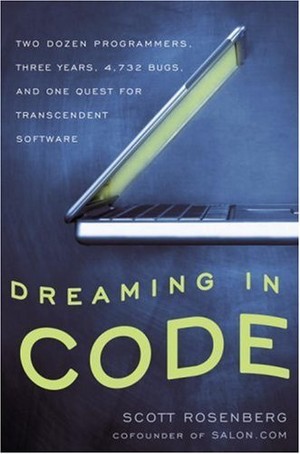
This book offers a fantastic deep dive into the Chandler team's work on a particular project, and software development more broadly. While I didn't get to the final mix, it felt like the project only represented about a third of the overall content. The references were excellent, touching on figures like Kay and Lanier, and the very origins of Software Engineering and its early conferences. It really explores the challenges of scale, contrasts software with other fields, and debates the art versus science aspect. Despite the team's struggles and setbacks in realizing their ambitious vision, the book is frequently inspiring, thanks to insightful conversations with team members and external experts sharing their passions and ideals.
This book was a fantastic surprise! It offered a completely fresh perspective on software development, moving beyond the typical technical jargon to explore the human side of creation. The narrative beautifully captured the ambitious journey of a visionary project, highlighting the inevitable challenges and the team's resilience in overcoming them. It's an inspiring read that makes you ponder the complexities of software, but also celebrates the spirit of innovation. I absolutely loved it and highly recommend it to anyone interested in the 'why' behind the code.
This book really shines in its exploration of the challenges inherent in developing massive, intricate software. The author does a fantastic job of articulating these difficulties, making for a truly insightful read.
This book, penned in the mid-2000s, really hammered home the point that software development is, and remains, a tough gig. It felt like cracking open a time capsule, and with the benefit of hindsight, it's clear the solutions they were aiming for are now much simpler to achieve through modern infrastructure like cloud-based apps and JSON file imports. Still, you've got to admire the courage to make a bet, even a losing one, because that's how we all learn and progress.
While this book offered a decent look into the challenges of software development, it left me feeling quite unfulfilled. The narrative abruptly stopped before the software project was actually finished, which, though understandable due to writing deadlines, made for a rather unsatisfying conclusion. It's a shame the project itself seems to have been abandoned years ago. I'd suggest this for someone completely new to software development seeking a quick, introductory overview.
This book offers a fascinating look into the life of a software project, Chandler, through an engaging autoethnographic lens. It's packed with insightful digressions, exploring everything from programming paradigms to the history of computing, with lessons that remain remarkably relevant. Ultimately, the work powerfully underscores the central theme of software complexity, highlighting how our reliance on this essential technology far outstrips our collective understanding of its creation.
This book is an absolute must-read for anyone involved in software development, from engineers and product managers to students. It masterfully recounts the development of the Chandler personal information manager, offering a candid look at the persistent challenges and realities of software engineering. The narrative shines when it delves into the human element of development, portraying the messy, fluid, and often brilliant process of bringing software to life. Even though it was written about events from the early 2000s, its insights remain remarkably relevant today, making it a timeless piece.
This book delves into the challenging journey of creating Chandler, an ambitious open-source project. It really highlights how software development, especially for large-scale projects, is incredibly difficult, with teams consistently underestimating timelines and feature completion. The author effectively captures the hacker spirit while illustrating why building robust software is such a complex endeavor, drawing parallels to early bridge construction. I found it to be a fascinating read, and I suspect even those without a technical background would find its insights illuminating.
This book chronicles the ambitious, yet ultimately failed, development of the Chandler software. While the team aimed to create a revolutionary open-source Personal Information Manager, their approach of planning a massive application from the outset, rather than starting with a Minimum Viable Product, proved to be a significant misstep. The author's detailed account highlights common pitfalls in software development, such as excessive planning, overly optimistic estimates, and reinventing the wheel, serving as a cautionary tale for aspiring developers. Although many of the issues discussed remain relevant, the software industry has since adopted more iterative approaches, leading to improved success rates in project delivery.
This book offers a fascinating look into the world of software development, particularly for those already involved in or curious about the field. While it might not be for everyone, its accessible language and engaging historical anecdotes make complex concepts understandable. I found it particularly insightful for grasping the unique challenges and triumphs inherent in creating software.
As someone with a computer science background and a thesis in remote sensing, I found this book incredibly relatable. It's refreshing to see the author articulate the common struggle of underestimating project timelines, a problem I consistently face myself. The exploration of programming as more of an art than a science really resonated, and I appreciated the nuanced perspective on the complexities and simplicities of computing.
This book really dragged; I found it quite dull and lacking in substance. It felt like the narrative itself was stuck in a loop, much like the software project it detailed, never really progressing. I was anticipating some sort of resolution or significant development, but unfortunately, it just faded into an anticlimactic end.
This audiobook offered a relatable exploration of the challenges faced by software developers and managers, which was quite enjoyable. However, it primarily focused on outlining problems without providing actionable solutions, which was a significant drawback. The main case study also felt a bit premature, still being in its early development stages when the book was published. Despite these issues, it was refreshing to realize that many of these struggles are common, and there isn't one definitive way to navigate them. The observation that bug creation is inevitable and that fixing them can be unpredictable, along with the humorous acknowledgment of estimation as a 'Sophisticated Wild-Ass Guess,' really resonated. I'd still suggest it for those in the development lifecycle, mainly for the shared commiseration and a good laugh at our collective experiences.
This book really hit home for anyone who's ever been part of a programming team, especially a large one. The narrative follows a group trying to build what they envision as the 'ultimate' software, but it's refreshingly grounded – think scheduling and task management, not world domination. The author brilliantly captures the immense challenge of software development, even without external pressures, a sentiment I deeply relate to from my own experience creating essential company software. The writing is sharp, witty, and surprisingly insightful, drawing parallels that resonate strongly. It's definitely a worthwhile read.
This book offers a fascinating dual perspective, weaving together the historical evolution of software with the nitty-gritty of an open-source development project. The author's insider look at the project and its developmental background truly made for a compelling read. I particularly appreciated the "Engineers and Artists" chapter, which brilliantly draws parallels between software development and artistic creation, highlighting the crucial role of revision and peer review in both fields. It's a shame, though, that the software world doesn't embrace the study of existing great work as readily as the arts do; it feels like we're constantly reinventing the wheel, which is why open-source communities and technical blogs are such invaluable resources for aspiring developers.
This book is an absolute gem, perfectly explaining the world of software engineering for anyone curious about how our digital lives are built. Rosenberg truly captures the essence of the profession, making complex ideas accessible without requiring any prior technical knowledge. It's so insightful that I'm even contemplating making it required reading for a graduate course! I genuinely hope others pick this up to better understand the industry my husband and I have been a part of for over a decade; it's a remarkable piece of work that demystifies our profession beautifully.
As a developer, I found 'Dreaming in Code' a rather difficult read. The book chronicles the ambitious Chandler project, which ultimately didn't achieve its objectives. There were numerous moments where I questioned the decisions being made, feeling it served as a cautionary tale of software development pitfalls. However, the author's journalistic background offered a unique perspective on the project's triumphs and setbacks, which was quite insightful given my own technical viewpoint. Beyond that fresh angle, though, the book didn't offer much else of substantial value to me.
This book about software development really hit home for me as a developer; the struggles, the delays, it all felt incredibly familiar. However, that familiarity is also its weakness. While I struggled to get through it multiple times, eventually finishing via audiobook, I found it less engaging than similar books like 'Masters of Doom' because the subject matter, the Chandler personal information manager, just wasn't as compelling. Ultimately, it might be more suited for those adjacent to development rather than seasoned coders who will likely find the familiar challenges a bit dull.
This book offers a fascinating look into the world of software development, covering both the technical and less technical facets with remarkable clarity. It's accessible even to those without a programming background. While the accounts of the 'Chandler' development cycles can be frustrating, filled with relatable human and programming errors, it ultimately provides a realistic and insightful portrayal of the process. You'll find yourself nodding along, recognizing similar pitfalls you might have encountered yourself.
This book really hit the nail on the head regarding the software industry's current landscape. It's a fantastic introduction for newcomers and offers plenty of depth for seasoned professionals. I was particularly drawn into the startup's story, especially given the founder's vision for a unified personal information manager and the project's open-source nature. While the ultimate failure of the project is a bit of a mystery, it serves as a powerful reminder that even great ideas and talented teams can face immense challenges in software development. It's a lesson that resonates deeply, highlighting the inherent difficulties in bringing ambitious projects to fruition.
This book really dives into the history and people behind the ambitious Chandler project, and as an old-school programmer, I found it fascinating. It's a compelling look at how even brilliant visions can falter in the face of practical challenges and market dominance, much like how Word Perfect's superior formatting was ultimately overshadowed. The author skillfully weaves together the technical aspects with the human stories, offering great insights into the complexities of software development and the enduring dream of truly user-centric applications.
While 'Dreaming in Code' chronicles the ambitious journey of the Chandler PIM project, its narrative structure unfortunately mirrors the project's own meandering development. The book frequently shifts from engaging behind-the-scenes glimpses to lengthy, dry expositions on historical software engineering, which can feel jarring and out of place. For those expecting a compelling human-centric story akin to 'The Soul of a New Machine,' this book falls short, prioritizing technical tangents over the people driving the innovation. It's a shame, because the final anecdote offers a glimmer of the engaging storytelling that could have elevated the entire experience.
Initially, I was skeptical about picking up this book, mainly because the title suggested it wasn't about coding, which seemed counterintuitive given its content. However, it masterfully explores the human element behind software development—the challenges of collaboration, tackling seemingly impossible problems, and the historical evolution of programmatic thinking. This book is an absolute must-read for anyone involved in the software world, whether you're building it or just using it, as it delves into business, creativity, and the profound philosophical quandaries we face. It's a true gem that offers brilliant insights into the field, its history, and the motivations of its key players, all delivered through exceptionally engaging prose.
This book offers a fascinating look into the often-frustrating world of software development, detailing the chaotic journey from initial concept to a product that rarely lives up to its promises. The author brilliantly captures the immense challenge of coordinating hundreds of programmers and navigating mid-project redesigns, making the section on project management particularly valuable. It's a compelling read, even for those outside the tech industry, shedding light on the unique personalities and communication hurdles inherent in creating complex software. The insights into why programmers can be so difficult to manage are especially eye-opening.
This book offers a truly fantastic overview of computers, software, and the culture surrounding their creation, explaining concepts like free software and the origins of terms like 'wiki' with wonderfully accessible metaphors. However, a significant portion of the book delves into a company's slow-moving journey to develop a new software product, which, while thematically relevant, felt tediously paced. Additionally, the author's persistent bias towards the computing world as the ultimate pinnacle of all endeavors, exemplified by the 'quality triangle' discussion, felt unsubstantiated and a bit narrow-minded, though it wasn't a deal-breaker for the overall positive experience.
This book was a surprisingly delightful read, offering a feel-good vibe akin to 'Chicken Soup for the Elite Soul.' While the initial chapters were a bit of a slog, the introduction was captivating. The narrative humorously touches on outdated stereotypes about programmers and the tech industry, even quoting 'Real Programmers Don't Use Pascal' to highlight these points. Despite some questionable plot elements and a slow start, the inclusion of classic programming quotes from legendary figures makes it a worthwhile experience for those familiar with computer science lore.
While the book offered some intriguing anecdotes, it ultimately felt like a watered-down version of a software engineering lecture. The author's attempt to portray the software development lifecycle as some sort of mystical pursuit, comparable to studying the Kabbalah, really missed the mark for me. Furthermore, the explanations of certain programming concepts, like 'late-binding,' felt like an attempt to obscure a lack of deep understanding rather than clarify it. The depiction of a typical software project also seemed unrealistic, with programmers having seemingly endless time and resources, which is frankly a bit disheartening when considering the end result.
This book dives into the chaotic world of software development, chronicling a project that was plagued by delays and missteps. While the author attempts to mirror the success of 'Soul of a New Machine,' the narrative struggles a bit, especially since the project itself took years longer than expected to release. It's a fascinating, albeit sometimes frustrating, look at how even brilliant minds can stumble through the complexities of creating software, ultimately highlighting just how difficult and unpredictable the process truly is.
This book is a definite miss for anyone in the software development field; it's packed with what feels like empty rhetoric and offers very little practical value. The author's moments of insight were primarily when quoting actual experts, which highlights the book's overall lack of original substance. Frankly, the narrator's over-the-top delivery only amplified the dilettante feel, making the experience quite grating. It's hard to imagine anyone outside the industry finding the deep dives into technical minutiae engaging either.
This book was a real eye-opener, delving into the intricate considerations programmers face when embarking on new projects. I picked up a surprising amount of knowledge, complemented by a wealth of engaging anecdotes. What's more, the opportunity to actually download and experiment with the software the team has developed, and continues to refine, is an incredible bonus.