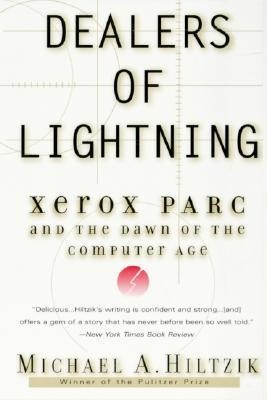
While the author clearly put in a lot of effort, their technical understanding doesn't quite match the grandeur of the PARC topic. The narrative does a decent job of celebrating the brilliant minds at PARC and highlighting how Xerox management missed out on their genius, but it doesn't delve deeply into the technical or social implications. Ultimately, the book feels like a mismatch; it's too basic for computer science enthusiasts and likely too specialized for a general audience, leaving it in an awkward middle ground.
This book really opened my eyes to the sheer volume of groundbreaking innovations that emerged from PARC, from laser printers and Ethernet to the very concept of desktop computing with GUIs and object-oriented programming. It's astonishing how many foundational technologies we use today trace their roots back to this one place. The narrative also highlights the profound tragedy of Xerox's corporate management, whose resistance to change prevented them from capitalizing on these incredible advancements and ultimately led to others dominating the computing landscape. It's a fascinating, albeit frustrating, look at missed opportunities.
I was really looking forward to this book, but it ultimately fell a bit short of my expectations. While the premise and historical setting were intriguing, the author's deep dive into endless character descriptions and corporate maneuvering quickly became a slog. It's a shame, too, because I was hoping for more insight into the actual products, not just the behind-the-scenes drama. I learned a bit about photocopiers, sure, but I really wanted to know more about the Alto!
While the heavy dose of office politics might not appeal to every reader, this book offers a fascinating look at PARC's pivotal role in shaping modern computer technology. Having personally experienced the corporate environment at Xerox during the 70s and even interacting with PARC, I found the author's portrayal of both the groundbreaking innovations and the internal struggles to be remarkably accurate. It's a deeply personal account that even shed light on unforeseen consequences of my own actions, making it a thoroughly enjoyable read for me. For those who believe they already understand the evolution of personal computing, prepare to be surprised; this narrative reveals a history far more complex and astonishing than you might imagine.
This book offers a captivating look into PARC's history and the brilliant minds that shaped it into a computer science powerhouse during the 1970s. While it doesn't explicitly detail the secrets to PARC's success, it provides ample insights into fostering environments ripe for groundbreaking R&D, like the collaborative development of Ethernet. It also sheds light on Bob Taylor's pivotal role in the Alto project and debunks the notion that PARC was a failure, making for an enjoyable, albeit slightly lengthy, read.
This book really hammers home the idea that big corporations, like Xerox with its PARC division, struggle immensely with truly disruptive innovation. It's fascinating how they invented so many foundational technologies, only for others to capitalize on them. The author's core argument that established companies are too tied to existing revenue streams to adapt effectively feels spot-on, even when looking at companies mentioned as counterexamples today. Ultimately, it's a cautionary tale about how innovation labs can become isolated and how promising new ideas often get stifled by short-sighted financial thinking.
This book is a truly captivating dive into the birth of the personal computer at Xerox in the 1970s. Hiltzik masterfully chronicles how brilliant minds at PARC developed nearly every feature we now take for granted, from overlapping windows to the ubiquitous mouse. What really shines is the exploration of their creative process, showing how innovations built upon each other in a competitive yet collaborative environment. Even if you're not a tech whiz, the narrative is accessible, delving into fascinating interpersonal dynamics and corporate rivalries alongside the groundbreaking inventions. It’s a fantastic read for anyone curious about creativity and the genesis of modern technology.
This book dives deep into the legendary Xerox PARC, a place that truly felt like Computer Geek Camelot. It masterfully explores not just the groundbreaking innovations like the laser printer and personal computer concepts, but also the complex human dynamics – the egos, conflicts, and the harsh realities of big business that shaped its destiny. It's a compelling reminder that groundbreaking tech doesn't always find immediate success, and it's a fantastic read for anyone who appreciates the geeks who genuinely changed the world.
This book really shines a light on the incredible innovations that came out of Xerox PARC, like the laser printer and the mouse, which are foundational to the personal computers we use today. While the writing style can be a bit dry at times, the historical narrative is absolutely captivating. It's a fascinating, albeit cautionary, tale about how a massive bureaucracy can stifle groundbreaking technology, ultimately leading to missed opportunities for Xerox itself. The author does a great job of explaining the context behind Xerox's struggles to adapt to the personal computing revolution, making it a valuable lesson for any business.
This book was an absolute blast! It dives deep into the incredible history of Xerox PARC during its golden decade, the 70s and 80s, a time when a company truly let its scientists run wild with a massive budget. You'll discover the origins of groundbreaking inventions like Ethernet, PostScript, and the revolutionary Alto computer. While the first half brilliantly captures the birth of these ideas, the latter part shifts focus to the internal dynamics and the eventual departure of key figures to found or join tech giants like Apple and Microsoft.
This book brilliantly unravels the mystery surrounding Xerox's Palo Alto innovation lab, exploring both what they created and why the company failed to capitalize on those groundbreaking developments. It's a compelling narrative, exceptionally well-researched, and truly a remarkable achievement.
This book is a fantastic deep dive into the origins of the technology we use every day. It brilliantly chronicles the innovations at Xerox PARC, from Ethernet to OOP, and shows how that groundbreaking work influenced major players like Apple and Microsoft. For anyone with a background or career in tech, or even just a curiosity about how it all began, this narrative is incredibly satisfying and illuminating. It truly fills in the historical gaps, making the journey from early computing to modern devices feel complete and deeply resonant.
This book really shines as a follow-up to 'Where Wizards Stay Up Late,' offering a deeper dive into how PARC's innovations were ultimately leveraged by quicker companies. It's given me a much better understanding of the challenges involved in transforming revolutionary research into products people actually want to buy. Definitely a must-read if you enjoyed the first one.
This book truly brings the legendary Xerox PARC to life, showcasing the brilliant minds that shaped modern computing. It masterfully balances the human drama, technical breakthroughs, and business struggles, offering a compelling narrative of innovation and its challenges. You'll get a real sense of the triumphs and frustrations of the PARC pioneers as they clashed with both each other and the corporate suits. It's an entertaining and deeply informative read that I can't recommend enough.
This book really dives into the fascinating history of Xerox PARC, covering not just its groundbreaking innovations but also the messy internal politics and conflicts. While it doesn't quite reach the depth of something like 'The Soul of a New Machine,' the sheer scale of PARC's operations makes that understandable. I found the final chapter particularly insightful, offering a smart defense against common criticisms of Xerox's handling of their inventions, highlighting the immense challenges of innovation within a large corporation. The early and middle sections were also captivating, illustrating the intense ideological battles between the old guard of time-sharing mainframes and the revolutionary vision of personal computing.
This piece delves into Frederick Brooks' 'second-system effect,' explaining how designers often overstuff their subsequent projects with previously omitted features, leading to inefficient outcomes. The author then critiques the common narrative surrounding Xerox PARC's technologies, arguing that attributing their mixed fate solely to corporate blundering oversimplifies the complex challenges of commercializing innovation. It's a thought-provoking examination that challenges simplistic views on technological development and corporate investment in research.
This history of PARC's research is certainly readable, but it feels like it inflates the significance of some of their innovations. It often presents their breakthroughs as entirely unique, downplaying the fact that similar or related work was happening elsewhere. For instance, the laser printer section highlights its singular importance, only to later casually mention IBM beat them to market. It's a bit frustrating, as if the author believes groundbreaking ideas only ever emerge from one place. The book also suffers from some repetition, making it drag a bit in places.
This book masterfully details the incredible innovations born at Xerox PARC, truly highlighting its pivotal role in the personal computer revolution. While the sheer number of individuals involved can occasionally make it a bit dense, the narrative vividly captures the groundbreaking spirit of PARC's researchers. The author's exploration of Xerox's missed opportunities is particularly compelling, offering a stark look at how a company could squander such immense potential. It's an absolutely fascinating read for anyone interested in the history of computing.
This book is an absolutely stunning tribute to the pioneers of computing, reminding us of the incredible human ingenuity and sheer effort that underpins the technology we use daily. It masterfully weaves together the history, the struggles, and the ultimate triumphs of those who built the foundations of our digital world, making it a profoundly moving and inspiring read. You'll come away with a deep appreciation for the giants whose shoulders we stand upon and a renewed sense of wonder at what human curiosity can achieve.
This book was a complete miss for me. The plot felt disjointed and the characters were incredibly underdeveloped. I couldn't connect with any of them, and the ending was incredibly unsatisfying. I wouldn't recommend it.
This book dives into the fascinating history of Xerox PARC, highlighting its groundbreaking inventions that shaped modern computing, yet also its struggles to fully capitalize on them. I really appreciated how the author avoided the simplistic 'dumb corporation' narrative, instead offering a nuanced look at the inherent tensions between corporate goals and research innovation. While it provides a good overview of the history, drama, and background of these pivotal inventions, I found it lacked deeper analysis into the lab's operational philosophy or broader historical context, leaving it feeling more like a factual account than an interpretive exploration. It's a solid read, but I wished for a bit more insight beyond the facts.
This book offers a fascinating look at the groundbreaking innovations at Xerox PARC during the 1970s, highlighting figures like Alan Kay and the development of the ALTO, a truly revolutionary personal computer. While it details the foundational work in human-computer interaction, including the mouse and GUI, and the invention of Ethernet and Smalltalk, it doesn't quite delve into the 'why' behind PARC's incredible creative culture as deeply as I'd hoped. The audiobook, unfortunately, sounds like a low-quality recording, which detracts from the otherwise enjoyable historical narrative.
This book was a truly riveting read, though I admit I wished for a bit more technical depth, a common lament with computer books. It's essentially a love letter to anyone passionate about computing, offering a fascinating glimpse into the legendary PARC lab. The narrative really shines when it delves into the story of Xerox and the dawn of GUI PCs, arguing convincingly that Xerox was never the right fit to commercialize that groundbreaking OS. Ultimately, it's heartening to see how the engineers involved found success elsewhere, launching influential companies like 3Com and Adobe to bring their visions to life.
This book offers a fascinating look into the groundbreaking innovations at Xerox PARC during the 1970s, detailing the minds and culture behind technologies that shaped modern computing. While it might not resonate as deeply with younger generations accustomed to today's tech, it's a compelling read for anyone who remembers the early days of computing or is interested in organizational innovation. The author skillfully balances the human stories with the technological leaps, making it an engaging narrative even for non-technologists.
This book really challenges the common narrative about Xerox PARC, suggesting that the 'genius' story might be too simplistic. It thoughtfully explores the difficulties of managing a struggling company and the complexities of dealing with brilliant but difficult personalities, avoiding easy answers. While the author acknowledges the groundbreaking innovations that came out of PARC, they also present a more nuanced view of why those ideas didn't necessarily translate into Xerox's success, making for a compelling read.
This book offers a solid historical account of Xerox PARC and the dawn of the Computer Age. While it didn't personally resonate with me and fell a bit short of captivating my interest, it's undeniable that significant discoveries, even surprising ones, can still emerge from corporate research. The author suggests a certain 'magic' or quality that once defined PARC's early brilliance has unfortunately faded from the landscape of science and technology, possibly for good.
While the core story was quite captivating, its execution felt rather shallow. The narrative juggled countless names that quickly faded from memory and glossed over complex technical details, focusing instead on the most basic aspects. Ultimately, the emphasis on personal anecdotes left me disengaged, as I was primarily seeking a deeper dive into the technology itself and found the social elements rather dull.
This book is like the Grand Canyon of literature; it's vast and impressive, much like the common understanding of Xerox PARC's influence on modern software. While it confirms the widespread belief that they invented nearly everything, the narrative primarily deepens the existing myth rather than uncovering truly novel revelations. Beyond a few anecdotes, the book offers more context than groundbreaking new insights.
This book really captures the magic of the era that birthed my favorite industry. The author's meticulous research shines through, offering a deeply detailed and accurate narrative. While I found the pacing occasionally a little dense, it's an otherwise fantastic read for anyone fascinated by this formative period.
This book was a blast if you're into old computers, though I didn't always see eye-to-eye with the author's main arguments. The sheer joy of delving into the history of vintage tech made it a thoroughly entertaining read for me.