
Protocol: How Control Exists after Decentralization
Alexander Galloway challenges the popular myth that the internet is a chaotic landscape of total freedom. In Protocol, he reveals that while the network appears decentralized, it is actually governed by a rigid system of technical rules. He argues that the very code making global communication possible serves as a sophisticated mechanism of control. By treating computer languages like a form of l…
Shelves
More like this
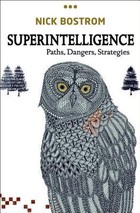
Superintelligence: Paths, Dangers, Strategies
Superintelligence asks the questions: what happens when machines surpass humans in general intelligence? Will artificial agents save or destroy us…
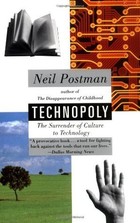
Technopoly: The Surrender of Culture to Technology
A witty, often terrifying that chronicles our transformation into a society that is shaped by technology—from the acclaimed author of Amusing Ours…
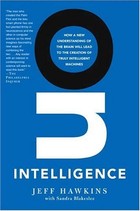
On Intelligence
From the inventor of the PalmPilot comes a new and compelling theory of intelligence, brain function, and the future of intelligent machines <…
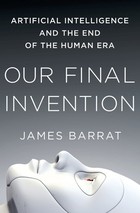
Our Final Invention: Artificial Intelligence and the End of the Human Era
In as little as a decade, artificial intelligence could match, then surpass human intelligence. Corporations & government agencies around the …

Life 3.0: Being Human in the Age of Artificial Intelligence
How will Artificial Intelligence affect crime, war, justice, jobs, society and our very sense of being human? The rise of AI has the potential to …
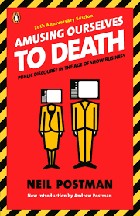
Amusing Ourselves to Death: Public Discourse in the Age of Show Business
Television has conditioned us to tolerate visually entertaining material measured out in spoonfuls of time, to the detriment of rational public di…
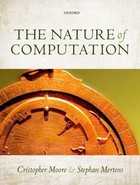
The Nature of Computation
Computational complexity is one of the most beautiful fields of modern mathematics, and it is increasingly relevant to other sciences ranging from…
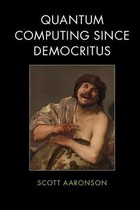
Quantum Computing Since Democritus
Written by noted quantum computing theorist Scott Aaronson, this book takes readers on a tour through some of the deepest ideas of maths, computer…
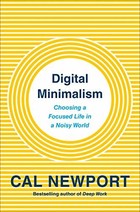
Digital Minimalism: Choosing a Focused Life in a Noisy World
Minimalism is the art of knowing how much is just enough. Digital minimalism applies this idea to our personal technology. It's the key to living …
A Thousand Brains: A New Theory of Intelligence
An author, neuroscientist, and computer engineer unveils a theory of intelligence, of understanding the brain and the future of AI. For all of neu…
Thinking Forth
Thinking Forth applies a philosophy of problem solving and programming style to the unique programming language Forth. Published first in 1984, it…
The Book of Why: The New Science of Cause and Effect
A Turing Award-winning computer scientist and statistician shows how understanding causality has revolutionized science and will revolutionize art…