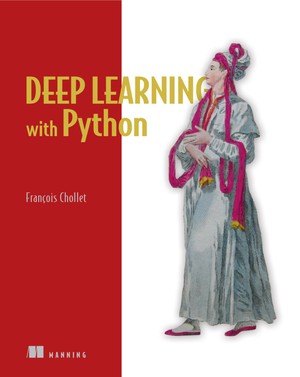
This book is an excellent resource, packed with thorough and practical code examples. It's clear the author is a passionate deep learning expert, and their insights really shine through.
This is hands down the best practical deep learning book out there. The author strikes an excellent balance between the theoretical underpinnings and hands-on application, making it accessible even for complex topics. As someone with a PhD in ML/AI, I was impressed by how thorough yet understandable the explanations of various deep learning areas were. The code examples are also incredibly straightforward to implement, which is a huge plus. I'd highly recommend this to anyone genuinely interested in mastering deep learning, and I'm eagerly anticipating the next edition.
This book was a quick read and exceptionally well-written. The explanations were incredibly clear, making complex topics easy to grasp.
This book truly gets to the core of applied deep learning, living up to its author's reputation. While the audio version was surprisingly decent for a programming text, it's no substitute for actually reading the material. The early chapters offer a great conceptual overview and history of machine learning, making them quite accessible, but the real meat of the book starts from chapter five onwards with practical Keras code templates for computer vision and text. Although these templates are a bit basic and don't cover the latest innovations, they're incredibly valuable for practitioners looking to quickly implement deep learning models. It's an excellent resource, especially for beginners, and I'll definitely be referencing it.
This book is an absolute gem for anyone looking to dive into deep learning with Python. François Chollet, the creator of Keras, offers a wonderfully practical and direct approach, with all examples conveniently using Keras. It's the perfect starting point; I'd suggest working through its examples first, then moving on to more theoretical texts like the one by Goodfellow et al. for a broader academic understanding.
This book is a fantastic resource for anyone diving into deep learning. The author, a leading researcher and the creator of Keras, does an excellent job of explaining complex concepts clearly, making it stand out among the many available texts. While the practical examples and code samples are a definite highlight, there were a couple of areas, like autodiff and batch normalization, where a touch more depth would've been appreciated, leading to slight superficiality in those spots. Still, it's an incredibly valuable addition to the field, and the second edition is even better than the first – truly outstanding!
This book is a fantastic resource, even if some concepts required a bit of extra thought due to the author's thorough exploration of the subject matter. I really appreciated the inclusion of accessible GitHub repositories that allowed me to actively engage with the projects discussed. I'll definitely be keeping this one handy for future deep learning endeavors.
This book, penned by the Keras creator, is a gem! It's packed with incredibly useful insights for anyone looking to build their own deep learning models. I found the explanations clear and the examples practical, making it a fantastic resource.
This book is an absolute gem for anyone looking to dive into machine learning. It offers a wonderfully clear and concise explanation of the technology, paired with practical, easy-to-follow code examples that let you build diverse models. Honestly, it's a far better approach than piecing together information from various online sources; this provides a complete and coherent learning package that I can't recommend enough.
While the original Turkish version might not be for everyone, the English translation is definitely worth picking up. It's a solid choice if you're looking for a good read.
This book stands out by honestly addressing deep learning's limitations, a refreshing change from the usual hype. It offers a solid, practical Python-based introduction while also delving into the intuition behind models. While I appreciated the lack of heavy math, sometimes the reliance on code snippets made certain technical concepts a bit challenging to grasp without any mathematical notation. Still, for a Python-focused guide, it's a commendable effort.
This is a wonderfully accessible and practical introduction to Deep Learning, presented as a clear overview of a subset of Machine Learning. Chollet makes the material easy to digest for readers of all backgrounds. It's a highly recommended read for anyone looking to get a grasp on the subject.
This book is an absolute gem, even if it took me a while to get through it. It's incredibly comprehensive, packed with clear explanations, diagrams, and examples that really solidify complex AI concepts. I especially loved how the author breaks down challenging topics and offers practical advice for real-world ML, making it an invaluable resource for anyone serious about the field.
This book is an absolute must-read for anyone looking to master Keras effectively. It provides clear, actionable guidance that will significantly improve your deep learning workflow.
This book offers a fantastic guide to deep learning with Keras, straight from its creator. It expertly navigates advanced concepts without getting bogged down in complex math or TensorFlow details, making it accessible. While beginners might find it a bit challenging without some foundational knowledge, it's a valuable resource for those ready to dive deeper.
This was a fantastic read! The explanations were crystal clear, and the examples provided were incredibly illustrative. I especially appreciated how the Jupyter notebooks made it so simple to follow along with everything.
This book offers a fantastic, hands-on introduction to deep learning, specifically using Keras. It covers all the essential neural network architectures, focusing on practical examples rather than heavy math, making it super easy to adapt the concepts to your own projects. It's a really solid resource for anyone looking to get started in the field.
This book, penned by the creator of Keras, offers an excellent and clear explanation of deep learning's main architectures and extensive techniques. I found the conclusion chapter particularly useful, serving as both a great sneak peek and a solid refresher on the subject matter. While the book is supplemented by a GitHub repository of notebooks, I'll be diving into those more thoroughly now.
This book offers a wonderfully clear and accessible guide to the Keras library, making it a fantastic starting point for practical, hands-on learning. While the later chapters do ramp up in difficulty as expected with more advanced topics, the initial introduction is incredibly solid. It's a great resource for anyone wanting to dive into Keras without feeling overwhelmed.
This book is like the 'Adventures of the Grasshopper' for deep learning – it's gentle, easy to grasp, and really sparks the imagination. I found it incredibly accessible and a joy to read.
While this book serves as a fantastic user manual for Keras, it falls short if you're looking for a deep dive into the mechanics of deep learning itself. It's an excellent resource for learning how to *use* Keras, but for true conceptual understanding, you'll want to supplement it with other texts, like the one by Goodfellow et al. It's a solid choice if your goal is practical application, but don't expect it to be the sole source for mastering the theory.
This book is a fantastic, hands-on guide to deep learning, perfect for anyone who's already familiar with programming. It really shines as a practical companion to the author's Keras library, making it easy to jump into real-world datasets and even Kaggle competitions. While it doesn't delve deeply into the theoretical underpinnings, which you might need another resource for, it expertly covers the essentials of neural networks with clear examples. It's essentially 'Deep Learning with Keras' in book form, and a very convenient one at that!
This book offers a fantastic introduction to machine learning, especially if you're interested in using Keras, and it's written by the library's creator! It covers all the essential techniques with plenty of code examples, from classification and regression to key architectures like CNNs and RNNs. What truly shines is its compilation of deep learning 'folk wisdom' – those unexplainable but effective tricks that make models perform better. The author provides helpful guidance on choosing activation and loss functions, as well as when to use specific architectures, making complex concepts more accessible.
This is a truly fantastic resource for anyone looking to dive into deep learning with Python and the Keras library. The authors, including Keras creator Francois Chollet, do an admirable job of covering everything from foundational math to advanced models like transformers, all with readily accessible Colab code examples. While the explanations for complex topics can sometimes feel a bit rushed, and a solid Python and linear algebra background is definitely a prerequisite, the book offers a valuable and practical introduction to machine learning. It's an excellent starting point, especially for those who can grasp the concepts quickly and are eager to see what Keras is capable of.
This book is an absolute standout, easily the most highlighted text I've ever encountered on machine learning, and frankly, most other subjects too. The author's explanations are remarkably clear, making even the Keras coding accessible, which I found to be a much gentler introduction to deep learning than TensorFlow. It masterfully bridges foundational concepts with advanced considerations, catering to both beginners and seasoned researchers. I'll be recommending this as the go-to resource for anyone wanting to grasp the current state of machine learning; it's a truly significant work that's bound to empower a new generation of ML engineers.
This book dives deep into the mechanics of neural networks and how to code them, making it an excellent resource for programmers eager to get hands-on with deep learning. While it might not be for everyone, those interested in the technical aspects will find it a remarkably clear guide to understanding and building these systems. The author does a solid job explaining the concepts using Keras, though a bit of 'magic' remains unexplained in the examples.
This book serves as an excellent introduction to Deep Learning, offering clear and practical explanations of its concepts and limitations. Even experienced ML practitioners will likely discover a few novel insights. It impressively delves into advanced topics such as building Variational Autoencoders and Generative Adversarial Networks from scratch, providing valuable advice for successful implementation.
This book is a fantastic starting point for anyone looking to dive into deep learning, especially given its author's pedigree with Keras and Google. It masterfully breaks down the foundational math and concepts before moving on to practical applications like computer vision, text analysis, and generative models. The included Jupyter notebooks are a breeze to run and, while they use Keras, the general principles are transferable to other frameworks.
This book is truly excellent, almost a perfect 4.5 stars! While the initial chapters explaining deep learning are incredibly informative and even fun to read – I've found myself using the analogies in everyday conversations – the final chapters could have benefited from clearer explanations of some concepts. Still, if you're looking to learn deep learning through hands-on implementation and testing, I wholeheartedly recommend it.
This book is a fantastic, practical entry point into deep learning. It wisely avoids getting lost in complex mathematical proofs, opting instead for clear, intuitive explanations and plenty of illustrative examples. The focus on implementation makes it incredibly accessible for anyone looking to grasp the core concepts without getting bogged down in theory.