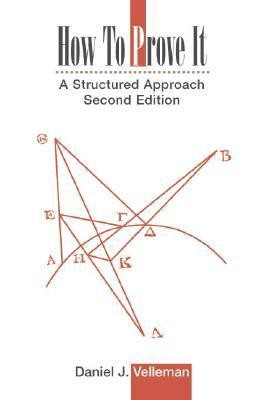
How to Prove It: A Structured Approach
Daniel J. Velleman provides a clear roadmap for students moving from computational math to the rigorous world of formal proofs. This book serves as a bridge for those who find the jump to abstract mathematical thinking daunting. By focusing on the underlying structure of mathematical arguments, Velleman helps readers understand not just how a proof works, but how to build one from scratch. It is …
Shelves
More like this
The Visual Display of Quantitative Information
The classic book on statistical graphics, charts, tables. Theory and practice in the design of data graphics, 250 illustrations of the best (and a…
Feynman Lectures On Computation
When, in 1984–86, Richard P. Feynman gave his famous course on computation at the California Institute of Technology, he asked Tony Hey to adapt h…
The Code Book: The Science of Secrecy from Ancient Egypt to Quantum Cryptography
In his first book since the bestselling Fermat’s Enigma, Simon Singh offers the first sweeping history of encryption, tracing its evolution and re…
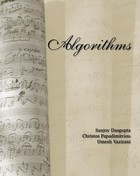
Algorithms (138563)
This text, extensively class-tested over a decade at UC Berkeley and UC San Diego, explains the fundamentals of algorithms in a story line that ma…
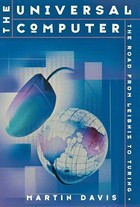
The Universal Computer: The Road from Leibniz to Turing
Computers are everywhere today -- at work, in the bank, in artist's studios, sometimes even in our pockets -- yet they remain to many of us object…
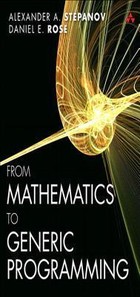
From Mathematics to Generic Programming
In this substantive yet accessible book, pioneering software designer Alexander Stepanov and his colleague Daniel Rose illuminate the principles o…
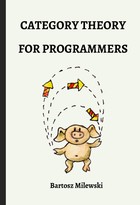
Category Theory for Programmers
Collected from the series of blog posts starting at: https://bartoszmilewski.com/2014/10/2... Hardcover available at: http://www.blurb.com/…
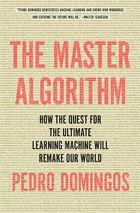
The Master Algorithm: How the Quest for the Ultimate Learning Machine Will Remake Our World
A thought-provoking and wide-ranging exploration of machine learning and the race to build computer intelligences as flexible as our own In the wo…
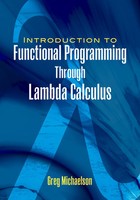
An Introduction to Functional Programming Through Lambda Calculus
Functional programming is rooted in lambda calculus, which constitutes the worlds smallest programming language. This well-respected text offers a…
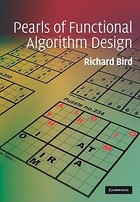
Pearls of Functional Algorithm Design
Richard Bird takes a radically new approach to algorithm design, namely, design by calculation. These 30 short chapters each deal with a particula…
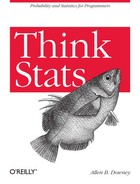
Think Stats
If you know how to program, you have the skills to turn data into knowledge using the tools of probability and statistics. This concise introducti…
R for Data Science: Import, Tidy, Transform, Visualize, and Model Data
Learn how to use R to turn raw data into insight, knowledge, and understanding. This book introduces you to R, RStudio, and the tidyverse, a colle…