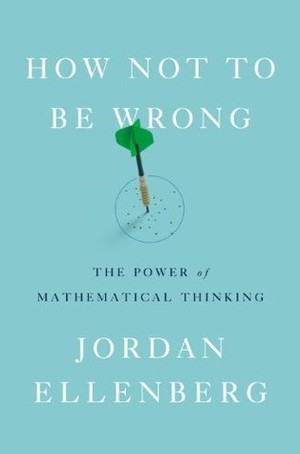
How Not to Be Wrong: The Power of Mathematical Thinking
Jordan Ellenberg redefines mathematics as a powerful extension of common sense rather than a collection of rigid rules. He demonstrates how mathematical thinking functions as a toolkit for navigating a chaotic world, allowing anyone to see the hidden structures beneath everyday life. By blending historical anecdotes with modern logic, Ellenberg shows that math is not just for academics but is a p…
Shelves
More like this
Introduction to the Theory of Computation
This highly anticipated revision builds upon the strengths of the previous edition. Sipser's candid, crystal-clear style allows students at every …
Programming in Haskell
Haskell is one of the leading languages for teaching functional programming, enabling students to write simpler and cleaner code, and to learn how…
The Art of R Programming: A Tour of Statistical Software Design
R is the world's most popular language for developing statistical software: Archaeologists use it to track the spread of ancient civilizations, dr…
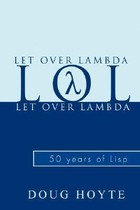
Let Over Lambda
Let Over Lambda is one of the most hardcore computer programming books out there. Starting with the fundamentals, it describes the most advanced f…
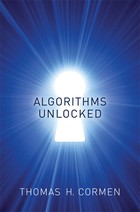
Algorithms Unlocked
For anyone who has ever wondered how computers solve problems, an engagingly written guide for nonexperts to the basics of computer algorithms.
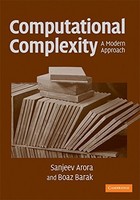
Computational Complexity: A Modern Approach
This beginning graduate textbook describes both recent achievements and classical results of computational complexity theory. Requiring essentiall…
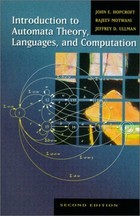
Introduction to Automata Theory, Languages, and Computation
It has been more than 20 years since this classic book on formal languages, automata theory, and computational complexity was first published. Wit…
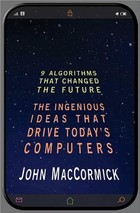
Nine Algorithms That Changed the Future: The Ingenious Ideas That Drive Today's Computers
Every day, we use our computers to perform remarkable feats. A simple web search picks out a handful of relevant needles from the world's biggest …
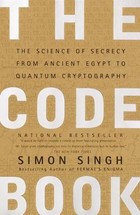
The Code Book: The Science of Secrecy from Ancient Egypt to Quantum Cryptography
In his first book since the bestselling Fermat’s Enigma, Simon Singh offers the first sweeping history of encryption, tracing its evolution and re…
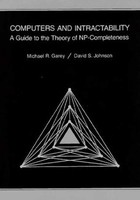
Computers and Intractability: A Guide to the Theory of NP-Completeness
In computer science, more specifically computational complexity theory, Computers and Intractability: A Guide to the Theory of NP-Completeness is …
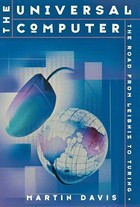
The Universal Computer: The Road from Leibniz to Turing
Computers are everywhere today -- at work, in the bank, in artist's studios, sometimes even in our pockets -- yet they remain to many of us object…
Reinforcement Learning: An Introduction
Richard Sutton and Andrew Barto provide a clear and simple account of the key ideas and algorithms of reinforcement learning. Their discussion ran…